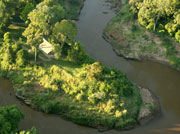
Masai Mara Reserve is probably the best place in Kenya to see plentiful big game. It's status as a prime location for wildlife has been much enhanced by the BBC TV's Big Cat Diary shot on location at the lodge where we centre many of our Masai Mara experiences.
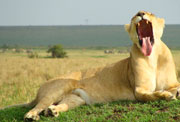
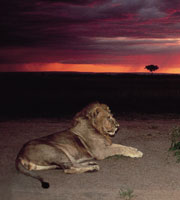
Of the reserve's big cat predators, lions can often be seen on safari conducting successful hunts oblivious to the presence of a vehicle. Whilst lions can be seeing lounging in the shade of many a tree, cheetahs are less obtrusive and leopards, though relatively abundant in the reserve, are less often spotted still.
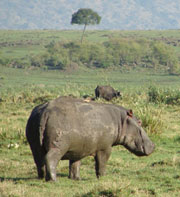
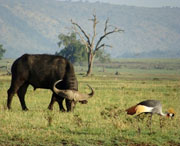
Of the larger species, hippos do little to hide themselves in the Mara river where they can be found in large groups. Elephants are usually in their largest numbers in the Musiara swamps where vegetation is at its most lush. Buffalo are widespread and undoubtedly the most dangerous animal to humans in the reserve. Vehicles are often severely dented by them, so it is important to give them a wide berth - especially old lone males.
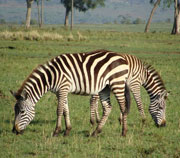
Rhinos are a key focus of conservation programmes, with both black rhino and white rhino brought in from South Africa. Other game includes warthogs, gazelle, zebra, hartebeest, topi, giraffe and noisy threatening groups of spotted hyena.
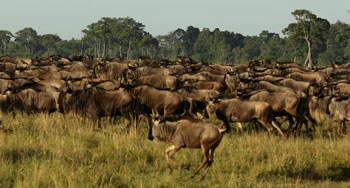
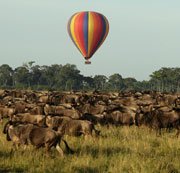
By far the most abundant visitor is the wildebeest, of which around 1 ½ million migrate into the Masai Mara each year from Tanzania's Serengeti. This event is the biggest large mammal migration on Earth and provides for some of the most chilling and spectacular animal interactions you are ever likely to see. The bottle necks of the migration in Kenya are the river crossings on the Sand and Mara Rivers. Here you see wildebeest and zebras leaping and swimming in a frantic effort to cross without being taken by a crocodile. There are many kills and fatal injuries, both in the rivers and on the Masai Mara's wide undulating grasslands. Of half a million new born wildebeest that cross from the Serengeti to the Masai Mara each year, just 1 in 3 survive to return.
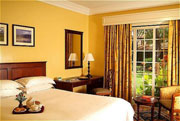
From the drama of safaris, night and day, you can enjoy peaceful midday and night time rests back at your safari lodge home in Africa. Kenya is the home of British colonial safari style which provides an intoxicating flavour of Africa when mixed with proud and colourful indigenous Masai culture.
Itinerary
Day 1
Upon arrival into Nairobi, you will be met and transferred privately from the international airport to Wilson safari link airport. You will soon be back in the air again, but this time onboard a small safari plane flying at low altitude into one of the richest wildlife regions of Kenya.
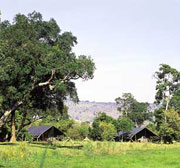
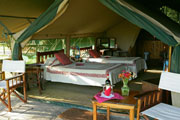
Once you land, you will be met by safari vehicle and taken to your permanent tented camp / safari lodge. There will be time today to commence your safaris which will be conducted, vehicle based, during both daytime hours and at night.
Days 2 & 3
(B,L,D)
Guided vehicle based safaris.
Day 4
(B)
After enjoying the early part of the day in the Masai Mara, you will be driven back to the air strip and flown to Nairobi.
Upon arrival you will be taken to your hotel.
Day 5
(B)
After breakfast, check out of your room ready for your onwards journey.
Prices
| Season (2011) | Price (£) pp sharing |
Single |
|
Low |
1170 |
190 |
| High (Jan,Mar,Jun,Nov, 1-15 Dec) |
1440 |
420 |
| Peak (Feb,Jul,Aug,Sep,Oct) |
1540 |
455 |
Prices include
Accommodation
Guided safaris
Flights and overland transfers
All meals when on safari
Breakfast in Nairobi
Masai Mara Park fees
Prices exclude
International flights
Meals not specified
Drinks
Tips
Visas
Insurance
Items of a personal nature such as telephone calls and laundry
Activities not specified